Friday, September 30, 2011

The Cost of Attic Insulation Grants 2

.


SEAI Attic Insulation Grants
May end up costing more than
the saving offered!!


I had a couple of enquiries regarding my DIY attic insulation project. To answer the questions: The insulation I used is called "Space Blanket", see the above picture. It is essentially pretty standard fibreglass - but it is inside a plastic tube. One side of the plastic is a silvery heat reflecting foil.

The fact that the stuff is enclosed in plastic stops air passing through the fibreglass and thus limits heat loss. The reflective foil acts as a thermal reflector and also increases the overall efficiency.

I found the "Space Blanker" insulation very easy to handle, it rolled out effortlessly and "inflated" to the proper thickness very quickly.

I purchased it at HomeBase in Killarney. At the time I bought it, there was a special offer running and I got it at a substantial discount. Keep and eye on HomeBase as they run promotions from time to time.


.

Thursday, September 29, 2011

Attic Insulation Cost Grants SEAI

.


SEAI Attic Insulation Grants
Worth the Hassle?

Two years ago I wrote that the SEAI Sustainable Energy Authority of Ireland's grant for attic insulation was simply not worth the trouble and the hoops you have to jump through to get it.

Do I still hold that point of view?  Is it worth you while doing a lot of form filling and having to have a BER assessment done to get the now reduced attic grant of €200?

Sure they give you a bit towards the BER assessment - but if you were charging for your time by the hour - bustin' your ass form filling and chasing down the grant, it would not pay you to go the SEAI route - especially if all you need to do is insulate your attic. Now, if you were contemplating a much bigger insulation job it would pay to chase down the grants.

Not Worth the Bother

IMHO it is still not worth the bother of going the SEAI route to add a bit of insulation to you attic. The "approved" installers can fairly charge for time and then you have the cost of materials on the top of it. If you are able to do DIY - putting down an extra layer in the attic is a simple job.

This is especially true if you use the newer type of roll-out fibreglass insulation which is enclosed in a plastic tube, and has a silvered foil on one side. It is called "Space Blanket". Some of the advantages it make the job a LOT easier, (a)  you don't get covered in prickly fibreglass particles, (b) it is very easy to roll out.  - other benefits (c) it also has higher insulation qualities.

So would I go the SEAI route for attic insulation - NO - NO - NO I most certainly would not. But then I did a DIY job and got the insulation  at reduced price and did the job for less than the value of the grant!!


.

Irish Health Service Sick

.


SICK - SICK
Irish Health Service


Truly sick Health Service Executive is more like it. Our paper shuffling monster is eating the good out of the economy. Absenteeism in the Western branch of HSE alone is costing  €15 taken out of the pocket of every man, woman, and child in the country - or  €60,000,000 a year to pay for HSE hangovers, monday morning-itis, and snotty noses of the pampered workers.

When will Ireland get its act together - and treat the Public Servants just the same as those working in the private sector - introduce them to the REAL WORLD.

I for one am completely pissed off with the high pay, the pensions, the time off and a dozen other benefits that the rest of us can only dream of. We are being taxed to pay for these perks for public servants.

This madness has got to end - and soon!!!


.

Wednesday, September 28, 2011

LED Lamps Comparison of 6 watt types

.


A Quick Check-back 
on some 6 Watt LED Lamps


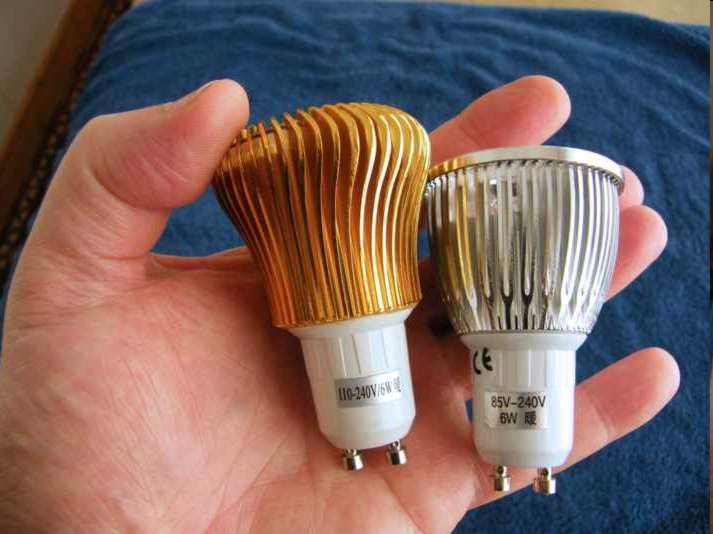
These 6watt LEDS have very poor light output - 
Less than a 5 watt of similar design


The above type of 6watt lamps are IMHO to be avoided. The light output for a 6watt LED is very poor. In fact, they give less light than a 5watt LED of similar design.

The gold coloured one on the left above is by far the poorest light output - I wouldn't bother with any more of these ever! The silver ones on the right, give a little better output - one advantage is the price is very low on these - I guess the Chinese acknowledge they have a loser and have priced it accordingly. They seem OK for holding output and none of mine have fried as yet. They might be worth looking at on economic grounds. At $5 for a GU10 LED that works but not as bright as a 6 watt should be - yea - good value enough if you are happy with the lower light output.

This is the star performer of the bunch - light output similar to 35Watt Halogen

The above type of 6 watt LED bulb I have found to be the best of the current bunch for light output. It is recognisable by the three separate small lenses rather than the other design which has all the LED under one large lens.

It matches a 35watt12 volt  halogen MR16. problem is here - the Chinese recognise they have a winner and have bumped up the already higher price in recent weeks by about 20%. I am sure that the high level pricing will not hold, I for one will not be buying anymore at the higher price.


.


Tuesday, September 27, 2011

Fireplace Doors and Stoves Some Suggestions

.


Introducing my Custom-made Fireplace Door to the opening


Some Suggestions
on Fireplace Doors

1. I would really only recommend a simple type fireplace door where there is a wrap-round "Firebird" or other make of back-boiler fitted. The reason for this is because the radiant heat to the room is greatly reduced by the glass door. Instead, the heat stays inside the chimney breast. With a wrap-round back boiler it can effectively transfer this extra heat to radiators, one of which should be fitted in the same room as the fire. The room then will be very adequately heated.

2. Where a chimney is on a gable or outside wall, you are going to lose out on some of the conserved heat, because part of that heat in the chimney will simply be warming the wall cavity and the outside of the house. You might need to consider this factor.

3. The answer to the above situations is to fit a stove rather than a fireplace door. This could either be a regular free-standing stove or an inset type stove. The inset stove is great where space is a problem or where there may be a lot of building work involved in fitting a regular stove. An inset stove however is less efficient than a regular free-standing stove and is a lot more expensive.

4. As with all solid fuel fires, it will take a bit of learning as to how best to operate the fire. What types of fuel and their mixture will take a bit of learning. A blazing fire will create too much heat and might lead to damage to the chimney breast. Draught too is very important and being able to properly control the air going through the fire is vital.

5. On the question of draught generally and of draughts in the room, a fireplace door will massively reduce draughts in the room, as it will limit the amount of air being drawn by the chimney. A open fire chimney is the same as a huge vacuum cleaner sucking air out of the room - it will cause draughts from every door and crack. The fireplace door will 95% stop this happening - and even when there is no fire going, the room will be cozier because of the lack of draughts.


.

Sunday, September 25, 2011

Solid Fuel Stove Insert Review part 3

.


Blacksmith Artisan stove - showing air intake vent bottom right

Blacksmith "Artisan" 
Insert Stove
part 3

This is the 3rd part of a look at an interesting stove insert which has been designed to fit directly into a fireplace opening without too many modifications to the fireplace or surround.

The insert stove gathers heat from the sides and back of the firebox by way of air channels. Cold air is taken in through two vents at the bottom of the frame, one either side, close to the ground.  The air is heated in the space between the outer casing and the firebox, and the hot air escapes out through a slotted vent at the top edge of the frame. The air moves only by way of convection, no fan assist, through quite narrow airways.

Top Slots are the warm air exit vents - The knob is a damper

 Damper Function and Operation not clearly outlined

The air heated in and around the firebox is vented through the slots at the top of the casing. The silvery knob operates a damper. The function and use of the damper is not properly explained in the somewhat inadequate user instruction manual. The damper knob pulls in or out about an inch or so. There is, however,  no clear indication in the instructions as to which is OPEN and which is CLOSED. For an item costing the best part of a grand, the instructions looks more like it came with goods bought in a pound shop. Blacksmith could really do a lot better here.

A Question of Efficiency?

The efficiency of an insert stove of this type is in no way comparable to a regular stove. My guess is that this stove is perhaps 20%- 30% less efficient than a free standing stove with air circulating freely all around it. That said, it is an elegant solution to, fairly effortlessly, making an open fire 200% more efficient, and, at the same time, making it safer, cleaner, and longer burning.

Price and Effectiveness

At the list price of €870 is is quite expensive as stoves go. Its stated output is 5Kw and 72% efficiency. The Anvil stove, by way of comparison,  sells at €450 has a stated output of 6Kw and efficiency of 80%. The Anvil has a stated 20% higher output - and a stated 11% higher efficient, although I would think the difference is perhaps greater than this.

Next post on this subject - I will round up with some more details and a bit of feedback from the actual use of the stove.

ADDENDUM:
Added 11th January 2012

I have received a copy of the certification certificate of the Artisan stove along with a set of technical drawings showing an exploded view of the stove from Blacksmith. It all looks 100% kosher. As far as I can tell from the drawings, all the bits are in the right places.

I acknowledge that I have only closely observed one installation and that any inefficiencies may well be associated only with this one stove and installation.

The bottom line however, as far as this one installation goes, is that the output of this stove is substantially less than a similar size of stove, the Blacksmith  "Anvil", which I have no hesitation in recommending.  I would however put the output of heat from the inset "Artisan" as somewhat disappointing.


.

Thursday, September 22, 2011

Fireplace Door Report part 2

.


Experimental Fireplace Door
Report
part 2


Measuring the Temperature of the Stonework just above the Door

After some time into using the fireplace door, it became obvious that it was drawing too much air from the underfloor inlet, and thus causing the fire to burn too brightly and without sufficient control. The problem; the Baxi air inlet control valve was only a very loose fitting butterfly "flap".

The answer to the problem required that the butterfly valve, in the Baxi underfloor unit, be modified, because, in its present form,  it was incapable of sufficient control of the now much higher pressure of air being drawn through the vent.

To do this I cut two "washers" from some thin silicone rubber sheet, and sandwiched these with a circular piece of aluminium to the back of the butterfly flap. This required a good bit of careful cutting and trimming, as the end result needed to be more or less airtight.


Silicone Rubber sheet and a circle of Aluminium to make an airtight valve
When I eventually got the valve to fit properly, I found it was very tight to turn and not at all easy to adjust. The answer to this problem, was to lubricate the affected part of the inside of the air supply tube along with the edges of the rubber washers with some silicone grease. Now the adjustment was smooth!!

Now, at long last,  I had an airtight (more or less) butterfly air intake valve. Which was capable of fairly precise control of the primary air supply and thereby gave me.precise control of the burn rate.

The Next Problem


Silicone Compound completely sealing around the edges


The next problem to present itself, was air leakage around the door frame. The only answer to this was to completely seal all around the door frame edges with some silicone filler.

The Gained Advantages

These above modifications gave me the degree of air control I needed in order to get a fully controlled burn. One fill of the fire with smokeless coal now will keep it burning now for 6+ hours, and it is even possible to get overnight burn.

Another major advantage was the noticable increase of heat transferred to the radiators via my County Kerry made "Firebird" high efficiency back boiler.

1.50m up the chimney 5hrs after the fire had gone out 28 deg C

Yet another advantage of the air tightness was the heat transferred to the fabric of the chimney breast.

Initially, I was a little worried that there might be too much heat accumulate in the brick and stonework. In fact a SEAI official stated to me in a phone conversation that this was a prime reason for their not promoting fireplace doors.

This worry however has proved so far not to be a problem. The heat does build up, over several hours, to about 40+ degrees, and it is retained for many hours after the fire has gone out. The chimney become a sort of storage heater!!

A bucket of coal now delivers me exceedingly good return in terms of heat output. I am most pleased with the experiment thus far.


.

Wednesday, September 21, 2011

Experimental Fireplace Door Report

.


My Experimental Fireplace Door

Update on my Experimental
Fireplace Door

Some seventeen months ago I installed a custom-made fireplace door in my 18"+ fireplace opening. The door was made by a very kind friend who is a skilled engineering researcher and designer. It is basically a very simple fire resistant glass door with a controllable air inlet and a good degree of air-tightness.

I have used the fireplace fairly extensively in the intervening period. I found it necessary to make a number of modifications to the set-up.

The set-up

At the time of fitting the fireplace door, I had an existing 18" "Firebird" back-boiler fitted over a "Baxi" under-floor draught unit. The Baxi draught unit had served very well over the years to produce good burning.

The new door, which had been made to measure fitted into the existing opening flawlessly and immediate results were obvious.

1. Draughts in the room, which had been created by the chimney,  were completely eliminated.
2. There was much better heat to the back-boiler - heating the radiators better.
3. The radiant heat from the fire into the room was greatly reduced - perhaps by 50+%
4. The chimney breast got hotter.

Further Findings

After using the door over an extended period I made several more observations which ultimately lead to making a couple of modifications to the set-up.

In the next post I will detail these modifications and the results - about which I am very pleased.


.

Stove Review - Blacksmith Artisan part 2

.


The Manufacturers dimensions for the "Artisan" inset stove


The Blacksmith Artisan
a closer look
part 2

Some Specifications Examined

Dimensions and Sizing

The manufacturers specifications state that the "Artisan" inset stove is good for both 16" and 18" fireplace openings. I would be inclined to dispute that statement.as the total width of the stove is 488mm or 19.2 inches. Assuming you have an exact 18" fireplace opening, that only gives you a fraction over half an inch both sides to get an air tight seal against the edges. I really think that this is not enough of a flange width to do a proper job. If your opening is anything at all over the 18 inches wide - then forget it altogether.

I am inclined to think that this stove is good only for 16" openings. Before considering it you would need to very carefully measure your existing fireplace opening for height, width and depth.

A Section from the Blacksmith brochure


Fitting the Stove

The specifications in the brochure say that this inset stove can be fitted - "without removing fireback".

Here again, I would have to disagree. In the case I observed, the fireback had to be partly chiseled out to accommodate the stove properly into the opening. Additionally, some of the tiles above the stove had to be cut with an angle grinder in order to fit in the stove.

A Typical Fireback found in open fires
 
All that said - the work involved was not extensive or very difficult to achieve - but it certainly was not as simple as the brochure would have you believe.

Again, in this case, you would need to consider the possible work entailed before deciding on this stove.

I will write some further posts on the Blacksmith Artisan over the next week or so - keep and eye out for them.


.

Monday, September 19, 2011

Blacksmith Fireplace Inserts

.


A Preliminary  Look at
The Blacksmith Stove Insert
part 1 
TWO MORE FOLLOW-UP POSTS NOW AVAILABLE USE SEARCH


Just installed today in my friends house the Blacksmith Artisan inset stove


As my regular readers will know, I have been strongly advocating the getting rid of open fires throughout Ireland because:

1. They are very inefficient - only one fifth of the heat stays in the house, the rest goes straight up the chimney.
2. They cause draughts by sucking air up the chimney - like a great big vacuum cleaner, thus pulling cold air in every little crack and door frame etc.
3. They cause accidents and house-fires.
4. They allow smell and smoke to permeate the room.

Instead I believed it would benefit both ecologically and financially, the individual and the Irish economy in general, to install either stoves or fireplace doors.

Another Fireplace Option

I am presenting and examining, in the next few related Blog posts, a 3rd possible option. This option is a complete stove, called the "Blacksmith Artisan" which is made in the form of an insert, that fits straight into a fireplace opening with the minimum of building work.The manufacturer says it fits both 16 inch and 18 inch openings.

A friend has just installed this option and has been kind enough to allow me to both photograph the stove and to closely examine it while functioning.


Manufacturers Technical Specification

Output: 5 KW (17,000 BTU)
Efficiency: Up to 72%
Weight: 91 Kgs.
Flue Diameter: 125mm (5”) Nominal -
Top outlet only
• Fits standard 16” and 18” fireplaces without removing fireback
• Primary and Secondary air controls
• Convection and Radiant heat
• Improves home energy rating (BER)
• Suitable for overnight burning
• Certified High Chrome internal castings
• Cast Iron internal back and side bricks
• Large glass door

Blacksmith Stoves,
H-Tec Limited,
City Enterprise Centre,
Waterford Business Park,
Cork Road, Waterford.
Tel: +353 51 845454
Fax: +353 51 845424
www.blacksmithstoves.ie

I will be writing up further details, over the coming weeks or so, on this stove, its price, its performance, and its installation details.

PLEASE use the search facility to locate the follow-up posts.


.